
How hard is the card for you?
FSRS estimates how hard it is to make the answer stick in your memory. Your ratings help update that estimate.
FSRS schedules each card from your past answers. A word you forgot may come back soon. A familiar word can wait longer.

The FSRS algorithm looks at each card separately. Even words you learned together can come back on different days.
FSRS estimates how hard it is to make the answer stick in your memory. Your ratings help update that estimate.
FSRS estimates how quickly the memory fades. The more slowly it fades, the longer the gap can be before another review.
FSRS combines the time since your last review with how well the answer has stuck. That helps it estimate whether you could recall it today.
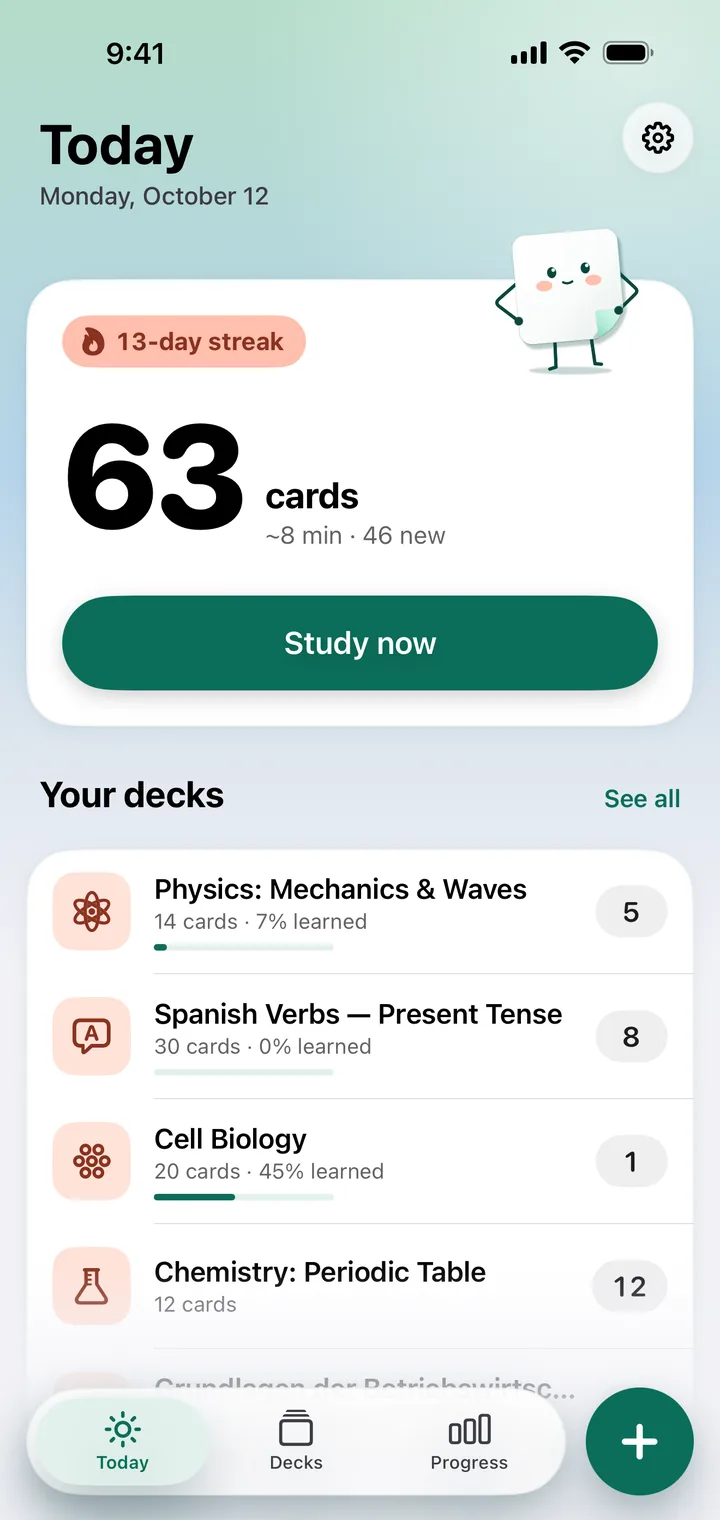
Start with the cards that are due for review.
Think of the answer before you check the card.
Tap Again, Hard, Good or Easy. Stickdeck uses that rating to schedule the card's next review.
Stickdeck shows a summary after the session.
Start with your due cards. Add a few new ones when you have time to review them again on another day.
Open Today in Stickdeck to see what's due. If you're short on time, do a short review session first.
Pick a small set from the topic you're learning now. Leave time to come back to those cards later.
If reviews keep piling up, spend your next sessions catching up before you add more cards.
FSRS is a way to schedule flashcard reviews. It uses your ratings and the time between reviews to estimate when to show a card again.
Tap Again if you forgot the answer. Tap Hard if you remembered it but had to think for a while.
SM-2 adjusts the gap between reviews based on how easy that card has been for you. FSRS uses your review history to estimate the chance you still remember the answer.
No. Stickdeck runs FSRS for you and uses your ratings to decide when each card is due again.
Open Today when you return and start with the cards that are due. If you keep forgetting to review, set a daily reminder in Stickdeck for a time you can usually study.
Yes. Stickdeck lists the cards you repeatedly miss in Progress. Use that list to spot which topics need another look.